
Internal software that makes operations calmer, not busier
Business systems are the software behind the scenes — where orders are processed, inventory is tracked, invoices are sent, and data moves between the tools your teams use every day. We implement, customize, and connect these systems so your operations run on accurate data and far fewer manual steps.
Why organizations invest in their business systems
Most operational friction isn't a people problem — it's disconnected tools and manual workarounds. When systems don't talk to each other, teams re-key the same data, reconcile mismatched reports, and firefight errors that shouldn't exist. The cost is real but hidden, spread across hours nobody tracks.
Investing in business systems is about giving the organization one reliable version of the truth and automating the routine work around it. The payoff isn't a flashy interface — it's fewer mistakes, faster answers, and teams spending their time on work that actually needs judgment.
One
Single source of truth instead of scattered data
Fewer
Manual steps, re-keying, and reconciliation errors
Faster
Answers when leadership needs to make a call
Where organizations get stuck
These are the operational frictions we hear most often — the symptoms that usually mean the software is working against the business rather than for it.
The business runs on spreadsheets
Critical processes live in fragile spreadsheets that only a few people fully understand, with no audit trail when something changes.
The same data entered in several places
Information is re-keyed between tools, so numbers drift apart and no one is sure which system to trust.
Off-the-shelf software that doesn't fit
A packaged product forces your team to work the way it wants, instead of matching how the business actually operates.
Tools that don't talk to each other
Sales, finance, and operations run on separate systems with no integration, so handoffs are slow and error-prone.
Reporting that takes days to assemble
Leadership waits while someone stitches together numbers by hand, and by the time the report lands it's already stale.
Manual work that scales with headcount
Growth means hiring more people to push the same paperwork, because the routine steps were never automated.
How we approach business systems
We start on the ground — with how work actually flows, not how a diagram says it should. That's the only reliable way to find where data breaks, where steps are duplicated, and where a system can quietly carry the load a person currently does by hand.
We prefer to improve and connect what you already have before replacing it. When customization or new software is warranted, we build it to match your operations, with the same emphasis on testing and documentation as any customer-facing product.
Understand the operation first
We map real workflows and data before recommending anything, so the system fits the business rather than the reverse.
One source of truth
We connect systems so data is entered once and stays consistent everywhere it's needed.
Automate the routine
We remove repetitive manual steps so teams focus on the decisions that genuinely need a person.
The forms Business Systems takes
Concrete examples of what we deliver — not a fixed menu. Every engagement is shaped around the problem in front of us.
Odoo ERP implementation
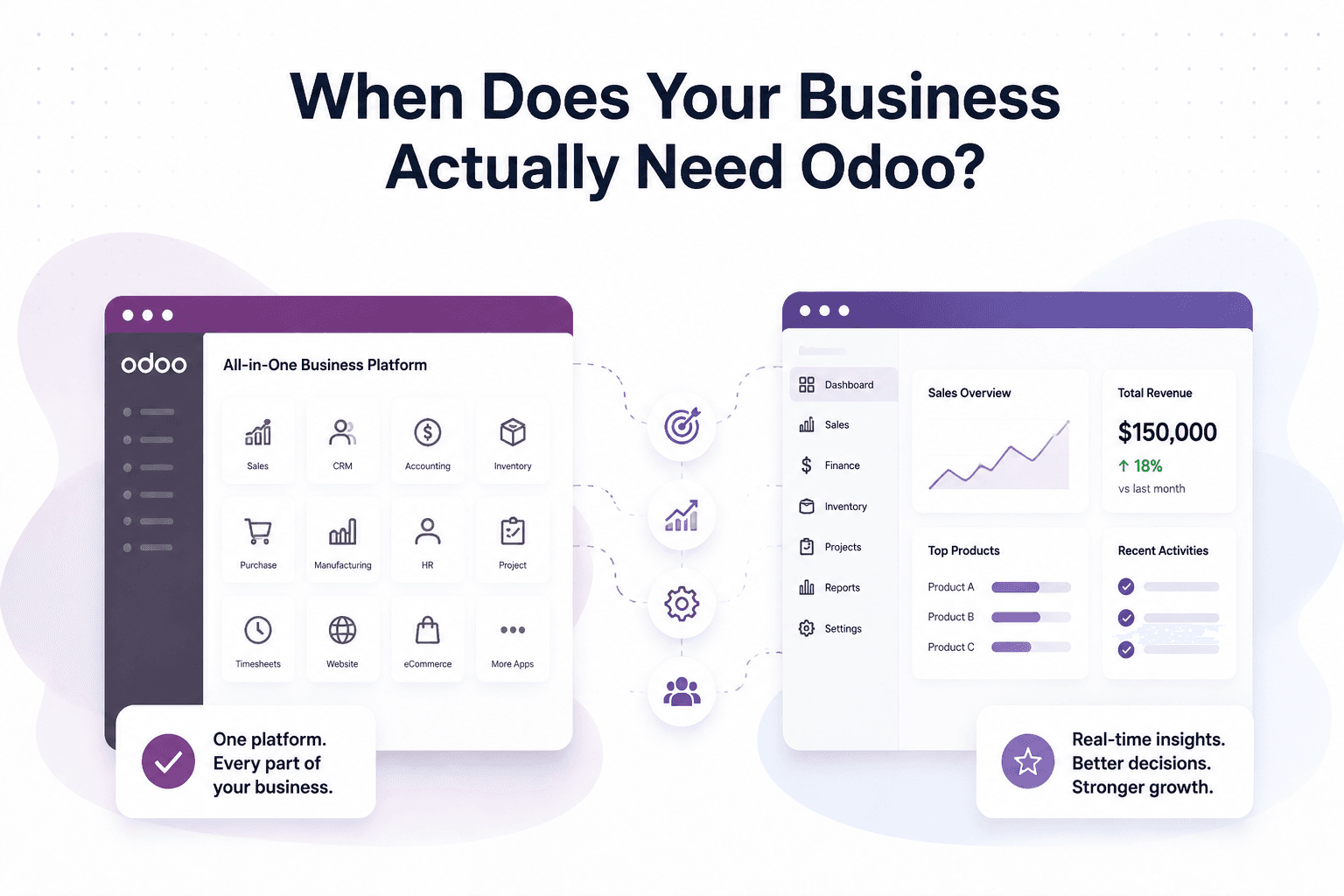
Implementation of the modules your operations depend on, configured around how your business actually runs.
ERP customization
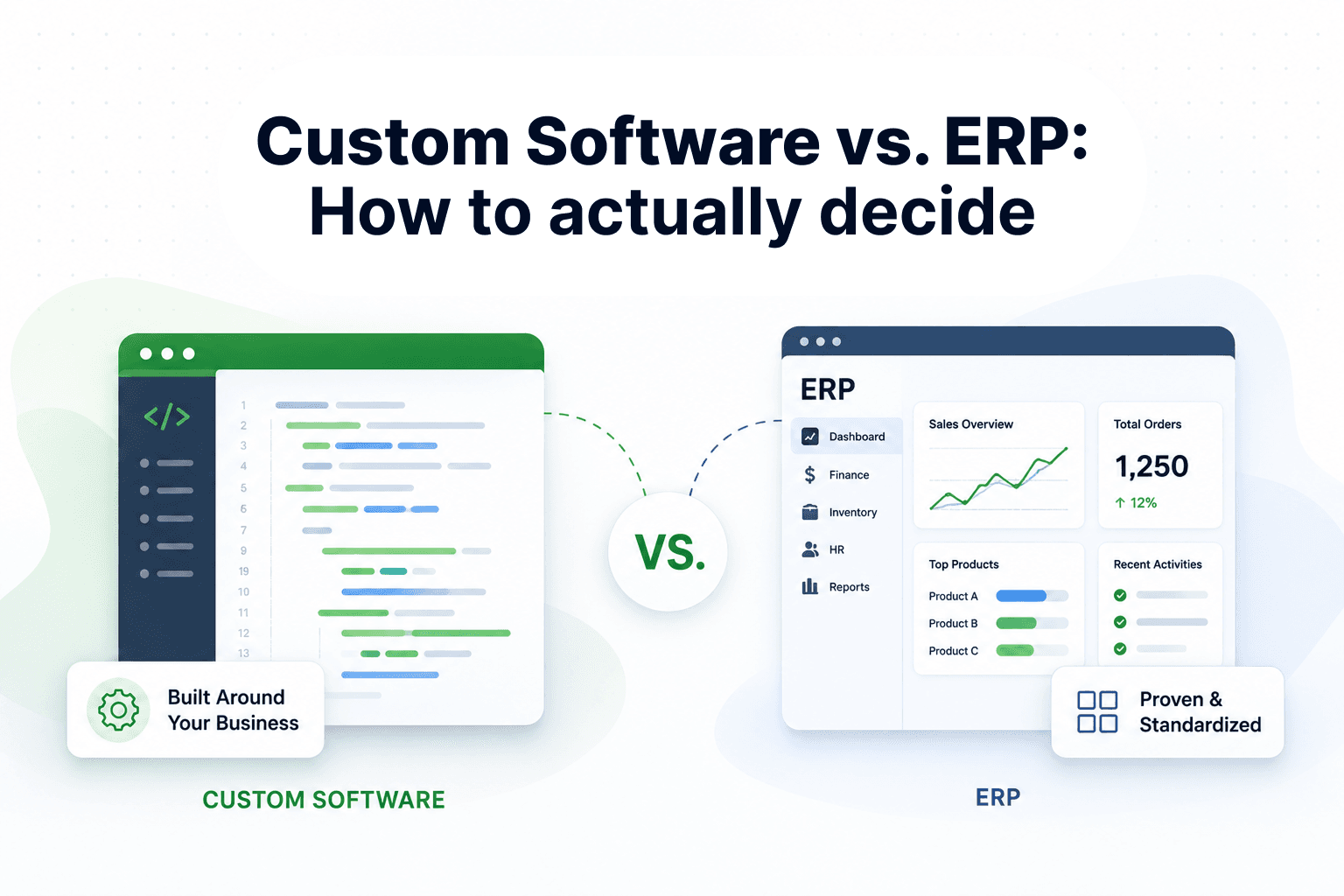
Tailored modules, fields, and workflows so Odoo matches your processes instead of forcing you to change them.
API development
Well-documented, secure interfaces that let your systems exchange data cleanly and reliably.
Backend systems
Robust services and data models that handle the logic and volume your operations require.
Workflow automation
Automated handoffs and approvals that remove manual steps and keep processes moving without chasing.
System integrations
Connections between your existing tools so data flows automatically and stays consistent across the org.
Who this is for
Business systems fit organizations where operations have outgrown their tools. Across the sectors we work in, the signal is the same: too much manual work, too many disconnected systems, and no single place to trust the numbers.
ERP, inventory, and production workflows that connect the shop floor to the back office.
Operations dashboards and automation that improve visibility across dispatch, fleet, and billing.
Donor, case, and volunteer systems that unify records and cut reporting overhead.
Any organization where growth currently means adding people to handle manual, repetitive work.
What you get from the work
The outcomes that make the investment worth it — not features, but the business value they create.
One source of truth
Connected systems mean data is entered once and consistent everywhere, instead of scattered and contradictory.
Less manual work
Automation handles the repetitive steps, freeing your team from re-keying and reconciliation.
Reliable integrations
Your existing tools keep working together, with data flowing cleanly between them.
Better operational efficiency
Faster handoffs and fewer errors across the processes that run your business day to day.
Growth without proportional headcount
Systems absorb rising volume so scaling up doesn't mean hiring for every manual task.
Secure, auditable operations
Access controls and clear records so sensitive data is protected and changes are traceable.
How a project moves from idea to launch
Every engagement follows the same dependable rhythm — so you always know what stage we're in, what's next, and what you'll see along the way.
- 01
Discovery & Scoping
We map how work actually flows and where data breaks, before recommending any change.
- 02
Proposal & Alignment
We prioritize what to improve, connect, or build, and define how success is measured.
- 03
Design
We design data models and integrations that fit your operations and scale sensibly.
- 04
Development
We implement and customize in reviewable increments, keeping you close to the work.
- 05
Testing & QA
We validate against real processes and data so the system behaves correctly in practice.
- 06
Launch & Handover
We roll out carefully, with training and documentation so teams adopt it with confidence.
- 07
Ongoing Support
We stay involved, refining workflows and keeping systems healthy as the business changes.
Questions worth asking first
The things clients most often want to understand before we begin.
Further reading
Practical writing from the way we build software, relevant to this solution.
Let's talk about your business systems project
Tell us what you're trying to build or improve. We'll help you shape the right approach and give you a clear path forward — no pressure, just a useful conversation.